

Limb-Girdle Muscular Dystrophy R5/2C (LGMD2C)
What is LGMD R5/2C (LGMD2C)?
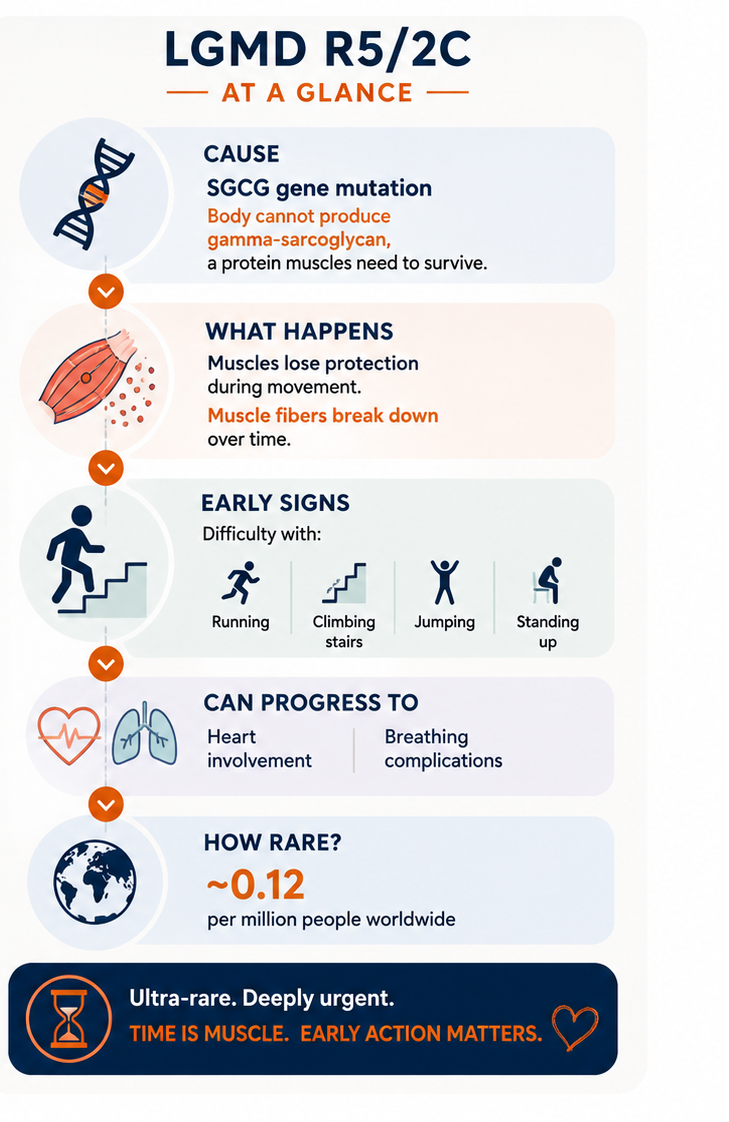
Limb-Girdle Muscular Dystrophy type R5/2C, also known as LGMD2C, is an ultra-rare genetic disease caused by mutations in the SGCG gene.
This gene helps the body produce gamma-sarcoglycan, a protein that protects muscle cells during movement and contraction. Without enough of this protein, muscle fibers progressively break down, leading to worsening muscle weakness and loss of mobility.
The disease usually affects the large muscles around the hips and shoulders, making running, climbing stairs, standing up, and walking increasingly difficult. As it progresses, children can face a significant loss of mobility, including the possibility of losing the ability to walk during adolescence or young adulthood.
It can also affect the heart and lungs, making early awareness, research, and support urgently important for children and families.
Early signs of LGMD R5/2C in children
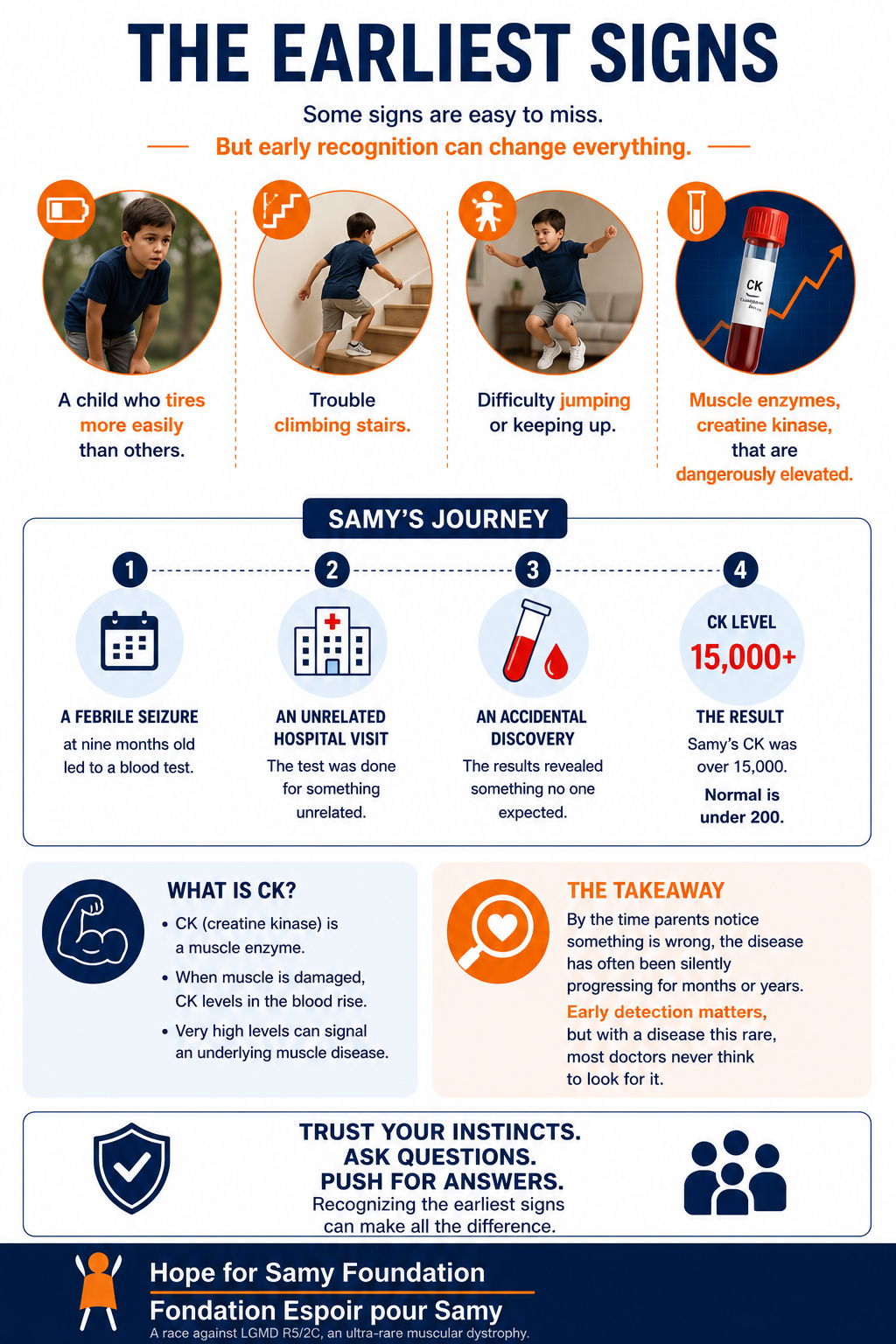
The early signs of LGMD R5/2C can be easy to miss. A child may tire more easily than others, struggle with climbing stairs, have difficulty jumping, or show signs of muscle weakness.
In some cases, high muscle enzyme levels, such as creatine kinase (CK), may be discovered by accident after an unrelated medical visit. That is how Samy’s journey began: a febrile seizure at nine months old led to a blood test that changed everything. His CK level was over 15,000, while normal levels are usually much lower.
Because LGMD R5/2C is extremely rare, symptoms can progress quietly for months or years before the disease is recognized. Early awareness matters, especially when parents notice something is wrong but do not yet have answers.
Early signs can be subtle. If something feels wrong, keep asking questions.
Common warning signs parents may notice
Because LGMD R5/2C is extremely rare, the first signs can be mistaken for normal childhood fatigue or delayed motor development. Parents may notice small changes before anyone else does. Possible early signs may include:
A child who tires more easily than others
Trouble climbing stairs
Difficulty jumping or keeping up with other children
Muscle weakness around the hips, shoulders, or legs
Very high creatine kinase (CK) levels in a blood test
Concerns that continue even when early symptoms seem subtle
These signs do not automatically mean a child has LGMD R5/2C, but they can be a reason to ask questions, seek medical advice, and continue looking for answers.
Why awareness and research matter
For families affected by LGMD R5/2C, awareness can help shorten the path to answers. Research also plays a critical role in advancing understanding of the disease and supporting progress toward future treatment options.
Hope for Samy Foundation exists to raise awareness, support research, and help families feel less alone when facing an ultra-rare neuromuscular disease.